
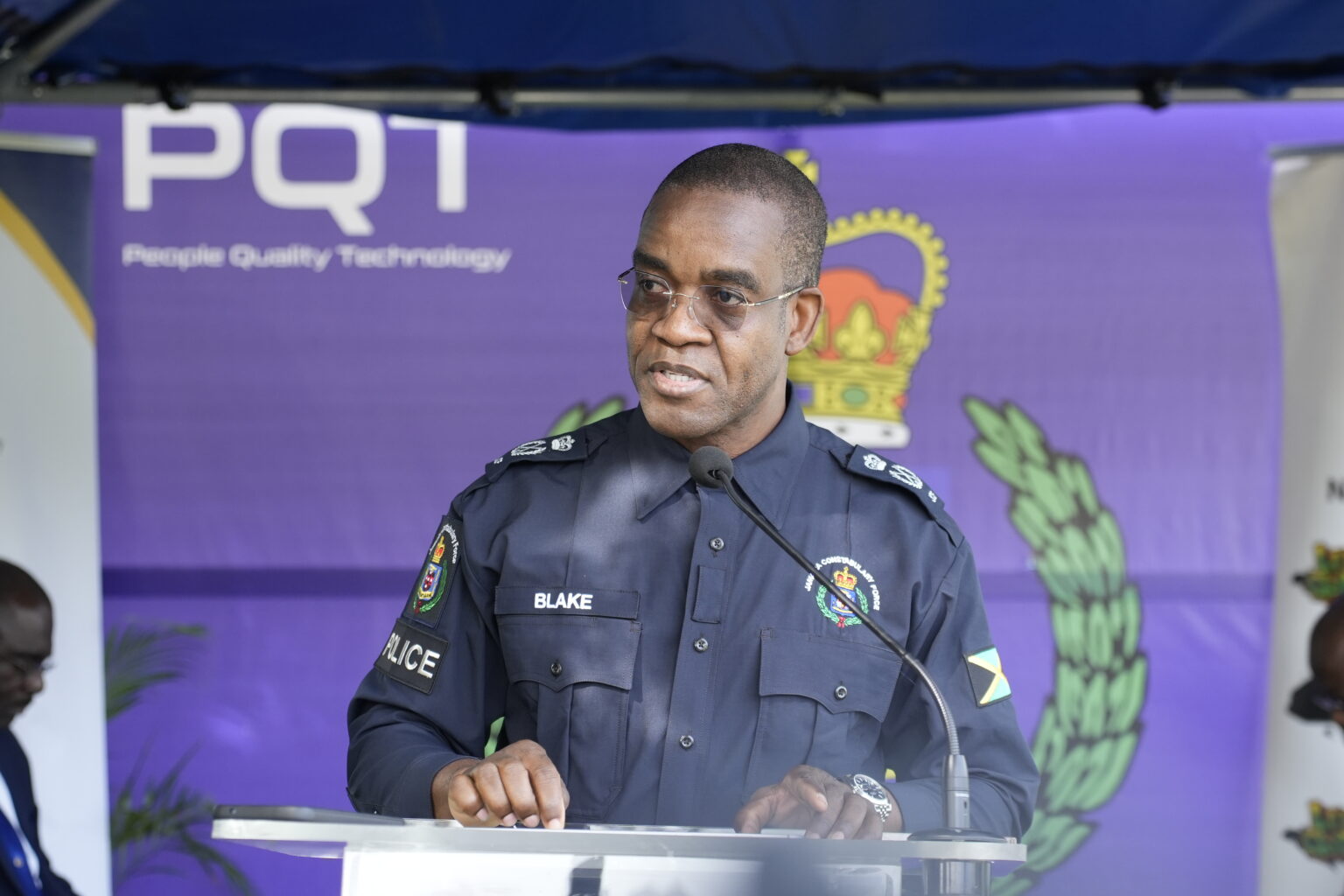
Police Commissioner Dr Kevin Blake has outlined that the country is currently seeing a 31 per cent reduction in murders compared to last year, and a 30 per cent reduction over the first quarter of 2025.
These figures, the Jamaica Constabulary Force (JCF) said, confirm that the effort to suppress violence continues to yield measurable results.
Dr Blake said these results are not the product of coincidence. They represent “deliberate policing, and coordinated, disciplined execution across all formations.”
The commissioner detailed that violence thrives in gaps: gaps in attention, gaps in supervision, gaps in presence. Therefore, policing that saves lives closes those gaps every day. “While the reductions are encouraging, it is the sustainability that requires steady leadership at all levels, and must remain our blinkered focus.” Violence adapts quickly to complacency. The commissioner describes adversaries who “watch us closely, test our resolve, wait for complacency, recalibrate and then they strike.”
The JCF expressed that the moment discipline weakens, opportunity returns to those who create harm.
Commissioner Blake further explained that life-saving policing demands “effective presence and diligence in operational execution.” It requires “timely response to calls for service.” It depends on “careful and consistent intelligence follow-up.” It includes “thorough vehicle checks while ensuring courteous and professional interactions.” It demands “visible presence in volatile communities providing reassurance.”
The commissioner also recognised that the protection of life involves more than enforcement. It requires legitimacy. Police activity must be “thorough, lawful, purposeful and professional.”
Communities cooperate with institutions they trust. Professional conduct strengthens that trust. Policing that alienates the public weakens the very partnerships that help prevent violence, the JCF said.
The commissioner also detailed that preventing violence preserves more than the individual life that survives; it preserves stability.
“We are protecting families and preserving communities. We are giving children a safer Jamaica in which to grow.” These lines move the conversation beyond crime statistics. The absence of violence allows neighbourhoods to breathe. Schools function normally. Parents move without fear. Children grow within spaces defined by opportunity rather than trauma.
The commissioner personalised this truth for the officers themselves, declaring that police officers live in the same society they protect. “When I remind you that we are first citizens of this beautiful country and then the police, it is because sustainable crime reduction benefits us personally.
“The safer Jamaica becomes, the safer our own homes become.” This insight reframes the mission in powerful terms. Crime reduction is not an abstract institutional objective. It is a shared civic responsibility that strengthens both public safety and private life,” Blake continued.
Dr Blake closes with a forward-looking challenge, encouraging the JCF that the first quarter of the year is nearing completion; therefore, momentum must be sustained. “We have to finish it strong, but more importantly, we have to build systems that make the second and third quarters even stronger.”